Efforts towards the realization of an eco-airport
(area heating and cooling business, etc.)
Measures against global warming including energy saving and the reduction of CO2 emission
Utilization of renewable energy (photovoltaic power generation business)
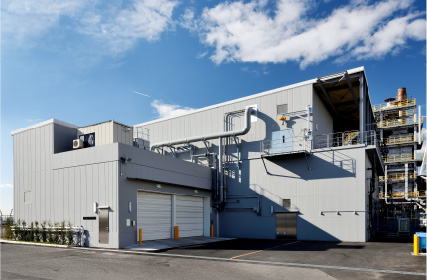
Aircraft sewage treatment in SD plant conforming to effluent standards
Clean energy
Installing megawatt-class photovoltaic power generation facility in Haneda
Airport
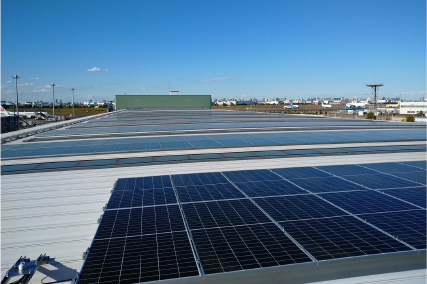
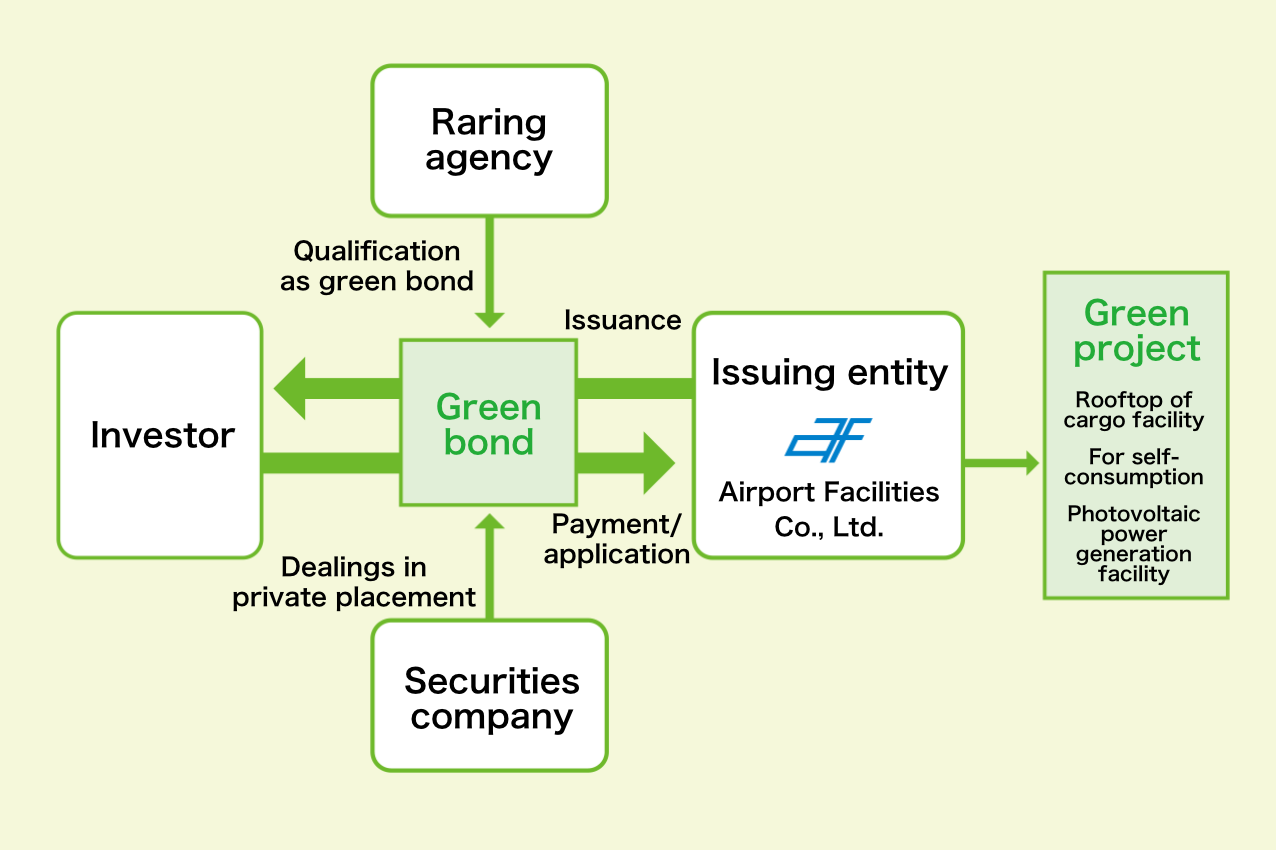
Megawatt-class photovoltaic power generation panels are installed in our company’s facility in the domestic cargo terminal of Haneda Airport. We are introducing clean energy by generating electricity equivalent to the consumption of about 300 households annually to cover some of the electricity consumed by the company’s facility. This plan is implemented as a green project that contributes to resolving environmental issues, including global warming, and some of the expenses for investment are financed through green bonds.
The photovoltaic power generation facility owned by our company annually generates electricity equivalent to about 2,710t emission of CO2 in total. We will continuously contribute to the reduction of CO2 emission through investment in renewable energy.
Photovoltaic power generation panels on the roof of
the cargo facility of Haneda AirportGreen bond relationship diagram
Reference: Photovoltaic power generation facilities of our
company
Construction completed in
Name of facility
Location
Annual power generation
Annual reduction of CO2 emissions*
March 2014
Kagoshima Airport Hangar No.1, Hangar No.2, and warehouse
Kagoshima Airport
Approx. 300,000 kWh
Approx. 140t
January 2018
TRC Distribution B Building Rooftop Solar Power Plant
Ota-ku, Tokyo
Approx. 2.56 million kWh
Approx. 1,250t
December 2020
Haneda Airport Domestic Cargo Terminal (rooftop)
Haneda Airport
Approx. 1.190 million kWh
Approx. 580t
May 2023
Seletar Airport, Singapore Engine maintenance Building
Seletar Airport, Singapore
Approx. 480,000 kWh
Approx. 230t
November 2024
Haneda Airport Engine Maintenance Building South Wing
Haneda Airport
Approx. 120,000 kWh
Approx. 60t
November 2024
Haneda Airport Components Maintenance Building
Haneda Airport
Approx. 60,000 kWh
Approx. 30t
December 2024
Seletar Airport, Singapore Airbus Asia Training Centre
Seletar Airport, Singapore
Approx. 680,000 kWh
Approx. 330t
December 2024
Kobe Airport Hangar (extension building)
Kobe Airport
Approx. 190,000 kWh
Approx. 90t
*: CO2 reduction = 0.489 (CO2/kWh) (Conversion factor based on the periodic report according to the Tokyo Metropolitan Environmental Security Ordinance)
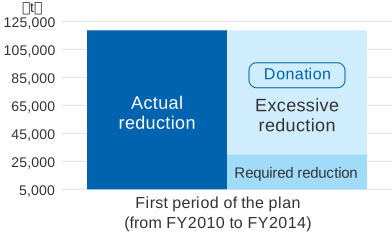
CO2 reduction
Donation of CO2 reduction to the Tokyo Metropolitan Government
Regarding environmental efforts, in addition to initiatives
regarding renewable energy, our group is making active efforts to reduce CO2 emissions through facility
investment for environmental measures, improvement of operation methods, educational activities to raise
environmental awareness among employees in their daily work, etc. Such efforts resulted in emission
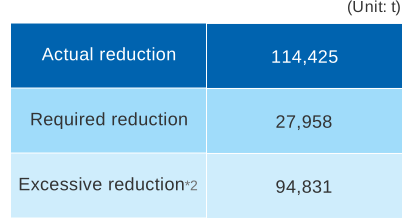
reduction by our company and Tokyo Airport Heating & Cooling Co., Ltd., our group company, exceeding the
required reduction level based on the Cap-and-Trade Program of the Tokyo Metropolitan Government (*1).
In March 2020, we donated the excessive reduction (*2) to the Tokyo Metropolitan Government.
Total reduction of CO2 emission by the Airport Facilities Group
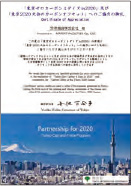
We received a letter of gratitude for the donation from
the Tokyo Metropolitan Government in April 2020. We will continuously make active efforts to
reduce CO2 emission to contribute in resolving the climate change issue.
*1 Cap-and-Trade Program of the Tokyo
Metropolitan Government: An initiative to make it mandatory for large-scale facilities in Tokyo to
reduce their CO2 emissions, and credit the reductions in emission achieved over the required level
for trade among businesses
*2 As for excessive reduction during the first period, the total of the required reduction and the
excessive reduction is larger than the actual reduction because the emission factor was reviewed
due to the occurrence of the Great East Japan Earthquake (please refer to the Guidelines on the
Operation of Emission Trading in Mandatory Reduction Targets and Emission Trade System).
*1 Cap-and-Trade Program of the Tokyo
Metropolitan Government: An initiative to make it mandatory for large-scale facilities in Tokyo to
reduce their CO2 emissions, and credit the reductions in emission achieved over the required level for
trade among businesses
*2 As for excessive reduction during the first period, the total of the required reduction and the
excessive reduction is larger than the actual reduction because the emission factor was reviewed due
to the occurrence of the Great East Japan Earthquake (please refer to the Guidelines on the Operation
of Emission Trading in Mandatory Reduction Targets and Emission Trade System).
Replacement to energy-saving equipment through the active use of LED
lighting
Latest investments
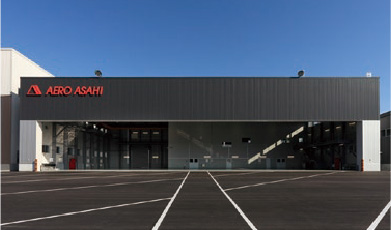
Small aircraft hangar at Hiroshima Heliport
Measures taken in small aircraft hangar at
Hiroshima Heliport
Aiming to save energy for more than 50% compared to
mercury vapor lamps and fluorescent lamps, LED is used for all lightings in small aircraft hangar
at Hiroshima Heliport. They are working without problems since the completion of construction in
March 2015.
Outline
Structure/number of stories: Steel-framed, two-storied Use: Hangar for
rotorcraft, office
Rinku International Logistics Center
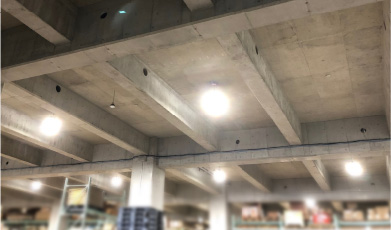
Lightings inside the warehouse are changed to
LED
For Rinku International Logistics Center, acquired in
September 2001, electricity use is reduced by replacing the multi-halogen lamps used inside the
warehouse with LED lighting. It also led to the improvement of work efficiency by improving
worksite visibility with increased illuminance.
Outline
Structure/number of stories: Four-storied logistics building and six-storied
office building Use: Office, cargo-sorting site
SD plant
About SD plant
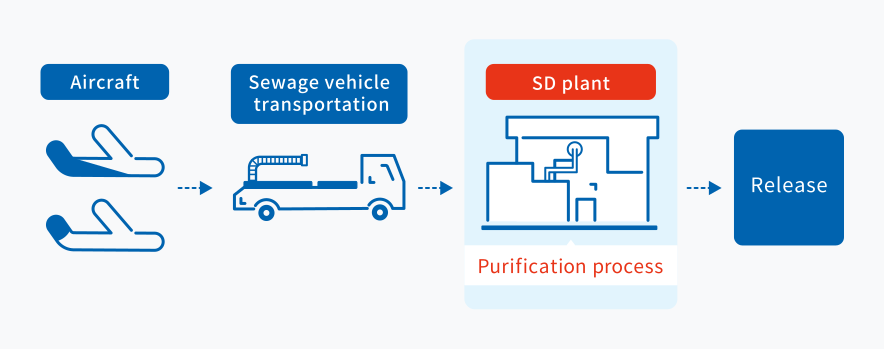
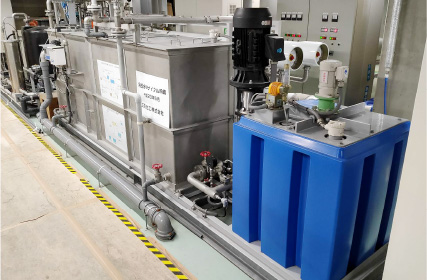
Aircraft sewage treatment facilities (SD plant), treating sewage by utilizing microorganisms to comply with effluent standards, are concentrating the know-how of our company acquired through many years’ experience, and are currently working in eight different airports in Japan.
They contribute in the conservation of the water quality of rivers and oceans. In Haneda Airport, construction of a new plant was completed in March 2020 in anticipation of an increase in demand.
SD plant
Aircraft contaminated water treatment flow
Area Heating and Cooling Business
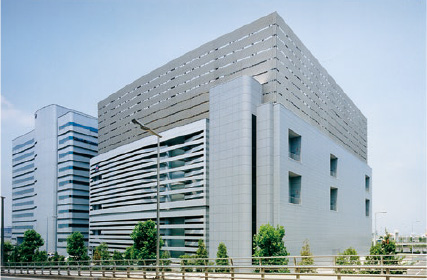
We support aviation through area heating and cooling in Haneda Airport.
Haneda Airport is used by many people every day, not only for
leisure and business travels, but also by people working within the airport area. Tokyo Airport Heating
& Cooling Co., Ltd., our group company, supplies “heat,” which is a part of airport function
infrastructure, just like electricity, communication, water and sewage, to support smooth and
comfortable operation of Haneda Airport. In specific, we supply heat for air conditioning in Terminal 1
and Terminal 2 and in complex of our company, and heat used for special purposes in addition to air
conditioning for hangars, maintenance plants, in-flight meal factories and airport-related facilities.
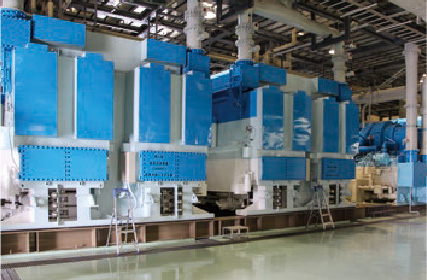
Center of heat supply: Energy Center (Tokyo Airport
Heating & Cooling)Energy-saving high efficiency freezer: High
efficiency freezers are actively adopted for the further development of our environmental measures.
Coolant water recycling equipment: Coolant water
necessary for the discharge of impurities from cooling tower is recycled with high-performance
filtering equipment introduced, to enhance our environmental measures.